

Play environments are vital in facilitating the holistic development of infants and toddlers through play. The creation of safe, inclusive, and engaging environments motivates children to explore and socialize in order to gain confidence through play. According to Harding (2023), play is crucial in developing the brain of children. On the other hand, Kaywork (2020) acknowledges the need for developmentally responsive environments for children.
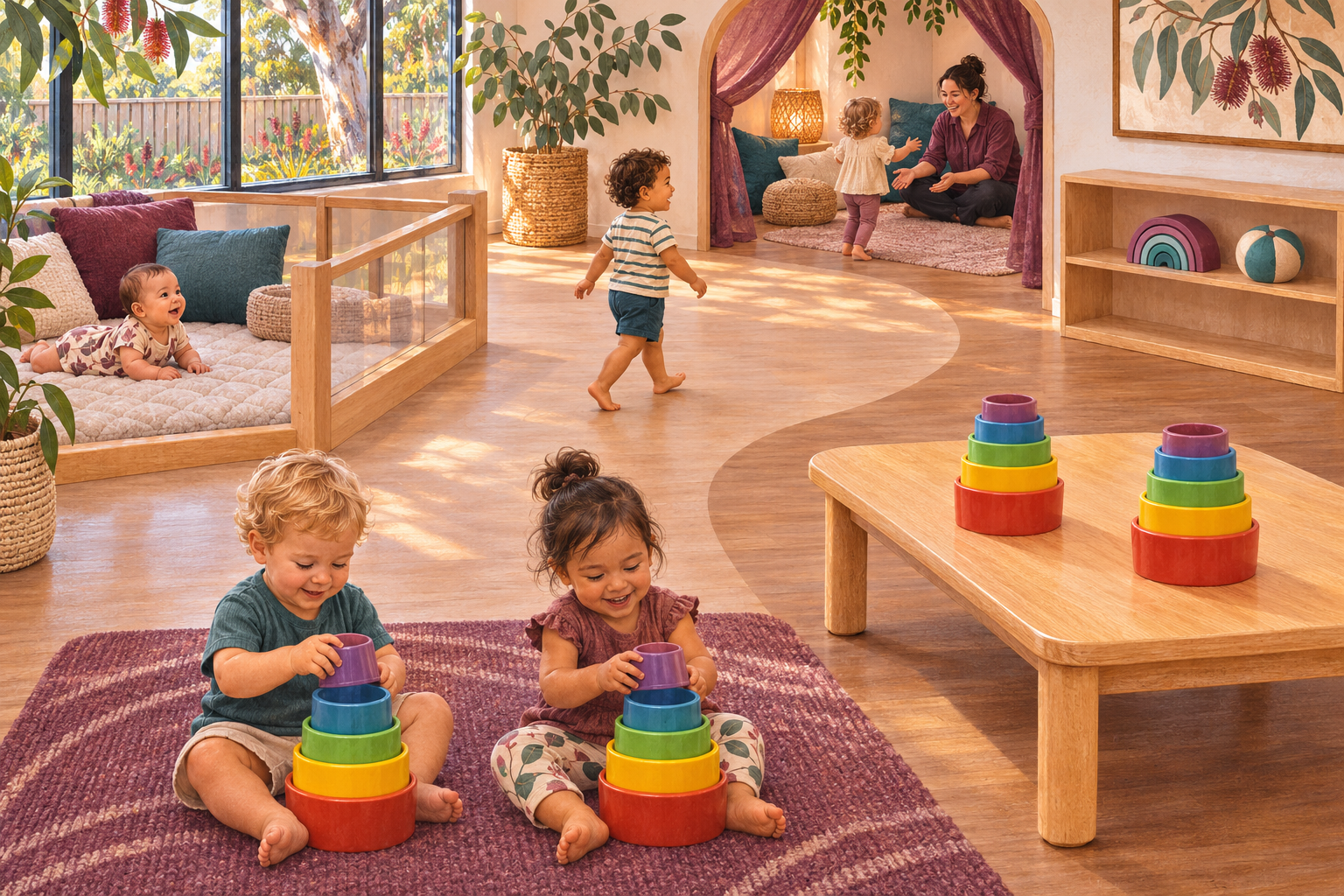
For children aged 0 to 12 months, materials such as soft play mats, sensory materials, mirrors, and tummy time areas are recommended in order to stimulate their development and interactions. Building blocks, picture books, and pretend play materials are beneficial for toddlers aged 12 to 24 months since they enhance independence and sociability of children (Sharma et al., 2021).

In addition, the educators need to develop the learning environment which will promote children’s agency, belonging and participation. According to Arthur et al. (2024), there is a great need for careful planning and consideration of the fact that a learning environment has to be responsive.
Through intentional planning and positive educator-child interactions, play environments can support children's curiosity, creativity, social relationships and overall wellbeing (Pendergast & Garvis, 2023).
Create Your Own Website With Webador