

Promoting Cognitive Development
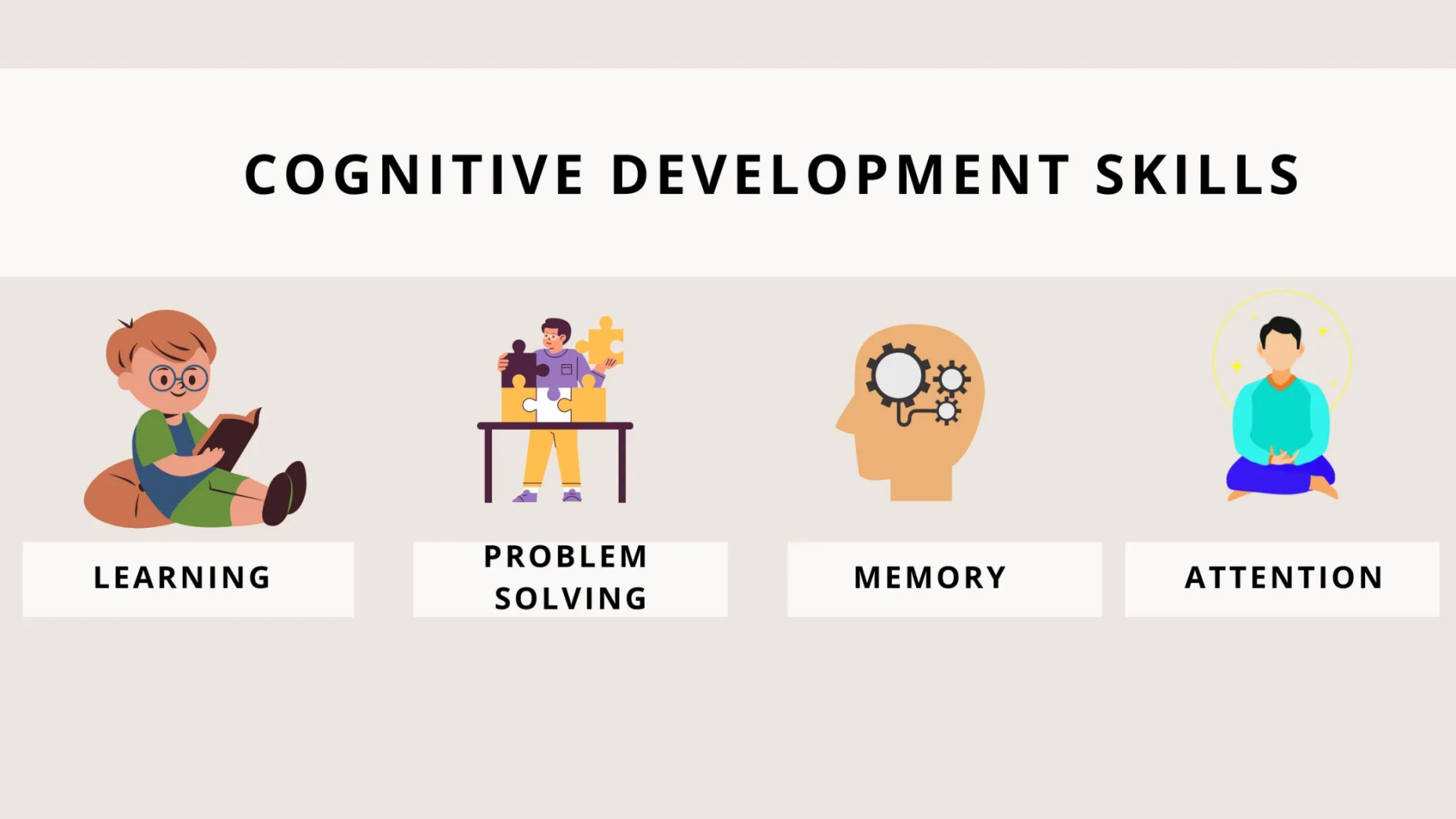
The cognitive development of infants and toddlers is concerned with thinking, remembering, exploring, problem solving, and understanding of the world around them. In the initial three years of their life, kids learn to think and understand their surroundings using sensory play, repetition and social interactions. Piaget suggests that kids are exploring learners who explore their surroundings in order to learn.
Teaching Competencies and Skills
Patience, keen observation and responsiveness to the interests and abilities of children is what teachers need to show. Teachers can use intentional teaching and teach them by introducing ideas, asking them simple questions, demonstrating activities, and helping children answer their questions. Scaffolding is also important.
Curriculum opportunities for authentic learning
The cognitive learning covers many fields which include science through nature; mathematics through counting, sorting, shapes and patterns; building to enhance the ability of space awareness and problem solving; art, music, stories and pretend play for creativity and memory.

Three cognitive development activities (0-12, 12-24 months, 2-3 years)
Activity 1: Texture and Sound Discovery (0–12 months)
Resources: Objects which have sensory characteristics and make sounds in a secure manner.
Procedure: The educator introduces each sensory object separately, names its features and lets the baby see, touch and hear the object. The educator takes cues from the baby's reactions and interests.
Learning Outcomes: The baby learns to be aware of sensory aspects and develops attention, memory and cause and effect relationship.
Activity 2: Shape Sorting (12–24 months)
Resources: An appropriately sized, shape sorter toy with blocks that are too big for ingestion.
Procedure: The educator shows the child how to place the shapes in their respective holes. The toddler is allowed to play independently with the toy.
Outcomes: Problem solving, shape identification, hand-eye coordination, and math skills.
Activity 3: Water Exploration (2–3 years)
Resources: Water tray, big cups, materials that can be put in the water.
Procedure: Experimenting with putting material in water to see which things sink and which float. The teacher poses questions such as, "What will happen if we use more water?"
Objectives: To stimulate prediction, reasoning, comparison, language and science.
Create Your Own Website With Webador